Car AC Repair vs. AC Recharge: What’s the Difference and When Do You Need Each?
When the Texas heat hits, your vehicle’s air conditioning is not a luxury. It is a necessity. If your AC stops blowing cold air or struggles to keep up, you might hear two common terms: AC repair and AC recharge. Many drivers use them interchangeably, but they are not the same thing.
Understanding the difference can help you make the right decision, avoid bigger problems, and keep your vehicle comfortable during every drive.
Let’s break it down in simple terms.
What Is an AC Recharge?
An AC recharge means adding refrigerant to your vehicle’s air conditioning system. Refrigerant is the cooling substance that allows the system to produce cold air. Without enough refrigerant, your AC cannot cool properly.
Over time, small amounts of refrigerant can leak out. When levels drop too low, you may notice:
- Air blowing warm or slightly cool instead of cold
- AC takes longer to cool the cabin
- Cooling feels weak on hot afternoons
- AC works better while driving than idling
During a recharge service, a technician checks refrigerant levels and adds the correct amount to bring the system back to proper pressure. They also inspect for obvious signs of leaks.
A recharge is a maintenance-type service. It restores cooling when the system is low but otherwise functioning correctly.
What Is AC Repair?
AC repair goes deeper. It involves fixing or replacing parts that are not working properly.
Your air conditioning system includes several components:
- Compressor
- Condenser
- Evaporator
- Expansion valve
- Hoses and seals
- Electrical connections
If one of these parts fails, simply adding refrigerant will not fix the issue. In fact, recharging a system with a leak or broken component may only provide temporary relief.
Common signs you may need AC repair include:
- Loud noises when AC runs
- AC clutch not engaging
- Strong odor from vents
- Visible refrigerant leaks
- AC blows hot air even after a recharge
- Electrical issues or warning lights
Repair means diagnosing the root problem and correcting it, not just topping off refrigerant.
Why Refrigerant Does Not Just Disappear
Many people assume refrigerant gets used up like fuel. It does not. Your vehicle’s AC system is sealed. It should not lose refrigerant under normal conditions. If levels drop, that usually means there is a leak somewhere in the system.
Leaks can develop in:
- Rubber seals
- AC hoses
- Compressor connections
- Condenser coils
In those cases, a recharge alone will not solve the issue long term. The system needs repair before adding refrigerant.
When You Likely Need an AC Recharge
You may only need a recharge if:
- Your AC slowly lost cooling over time
- The system still works but feels weak
- There are no unusual noises
- No visible leaks are present
- Pressure readings show slightly low refrigerant
A proper diagnostic check confirms whether refrigerant levels are low without major component failure. A recharge can restore full cooling if the system is otherwise healthy.
When You Likely Need AC Repair
You likely need AC repair if:
- Cooling stopped suddenly
- You hear grinding or squealing sounds
- The compressor does not engage
- You see oily residue near AC components
- AC blows warm air immediately after recharge
- There is a strong mold smell
Sudden failure usually points to a mechanical or electrical problem. That requires repair, not just refrigerant.
Why Diagnosis Matters
Guessing rarely solves AC problems.
Some drivers try a quick recharge kit from an auto parts store. That may seem convenient, but it can lead to:
- Overcharging the system
- Masking a serious leak
- Damaging the compressor
- Creating unsafe pressure levels
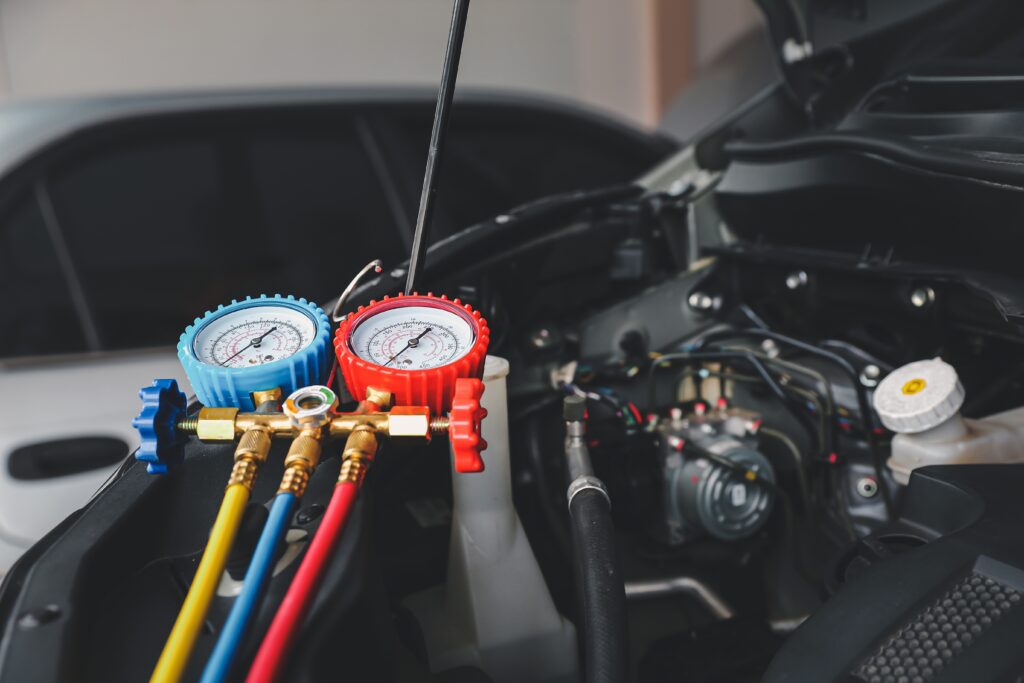
Modern AC systems require accurate pressure readings and proper equipment. A trained technician checks both low and high pressure sides and inspects components before recommending a solution. Diagnosis saves time and prevents repeat visits.
The Role of the AC Compressor
The compressor is the heart of your AC system. It pressurizes the refrigerant and keeps the cooling cycle moving.
If the compressor fails, you may notice:
- No cold air at all
- Loud clicking when AC turns on
- Belt squealing
- Engine strain
A recharge will not fix a bad compressor. In fact, running the system with low refrigerant can damage the compressor over time. That is why addressing cooling issues early matters.
What About Strange Smells?
If your AC smells musty or sour, you may have moisture buildup in the evaporator. That leads to mold growth inside the system. In this case, you need cleaning or evaporator service, not a recharge. Ignoring odors can affect air quality inside your vehicle and make driving uncomfortable.
Preventing AC Problems
You can extend the life of your AC system by:
- Running the AC regularly, even in winter
- Scheduling routine maintenance checks
- Fixing small cooling issues early
- Replacing cabin air filters as recommended
- Watching for signs of leaks
Small issues often grow into bigger repairs when ignored.
How Heat Affects Your AC System
In high summer temperatures, your AC works harder. Constant use increases wear on:
- Compressor seals
- Hoses
- Electrical components
If your vehicle sits in the sun for long periods, interior heat can strain the system during startup. Regular inspections help catch weak components before they fail during peak heat.
Common Misunderstandings
Let’s clear up a few myths.
Recharging fixes every AC problem?
Not true. If a part fails, refrigerant alone will not help.
Does AC only need service when it stops working?
Waiting often turns small fixes into major repairs.
Do all AC issues cost the same?
Every system is different. Proper diagnosis determines the correct repair.
Understanding the difference between recharge and repair helps you avoid unnecessary work and protect your vehicle.
What a Professional AC Service Includes
A complete AC check typically includes:
- Pressure testing
- Leak inspection
- Compressor inspection
- Electrical system check
- Cabin air filter inspection
- Vent temperature testing
After diagnosis, the technician recommends either a recharge or a repair based on actual findings. This approach keeps you informed and confident in the work performed.
Why Acting Early Saves Headaches
When cooling starts to weaken, address it quickly. Driving with low refrigerant can damage major components. Running a failing compressor can spread debris through the system. Fixing minor leaks or replacing worn seals early prevents larger failures. Comfort is important, but system protection matters just as much.
FAQs
How do I know if my car AC just needs a recharge in Pottsboro or Sherman?
If cooling gradually weakened without noise or sudden failure, you may only need a recharge. A professional inspection confirms it.
Can I drive with low refrigerant around Denison?
You can, but it may damage the compressor over time. It is better to have it checked early.
How long does an AC recharge take?
Most recharge services take about an hour, including inspection and testing.
Why does my AC blow warm air after a recharge?
That often means there is a leak or mechanical issue that needs repair.
Do you check for leaks before recharging AC systems in Grayson County?
Yes. A proper AC service includes pressure testing and inspection before adding refrigerant.
Need AC Service You Can Trust?
If your vehicle is not cooling like it should, let the team at A&O Auto Care take a look. We provide honest AC diagnostics and dependable repairs for drivers in Pottsboro, Denison, Sherman, and surrounding areas. Call 903-419-2356 today to schedule your AC inspection and drive comfortably again.